← Proposed workflows

ROLE AUTOMATION STUDY · 10 of 20 companies in our first outreach sample

Credit control & debtor follow-up

Keep routine overdue accounts followed up using current balances, conversation history and a controlled reminder schedule.

ILLUSTRATIVE PROPOSAL · NOT A MEASURED CLIENT RESULT

See the work happen on screen.

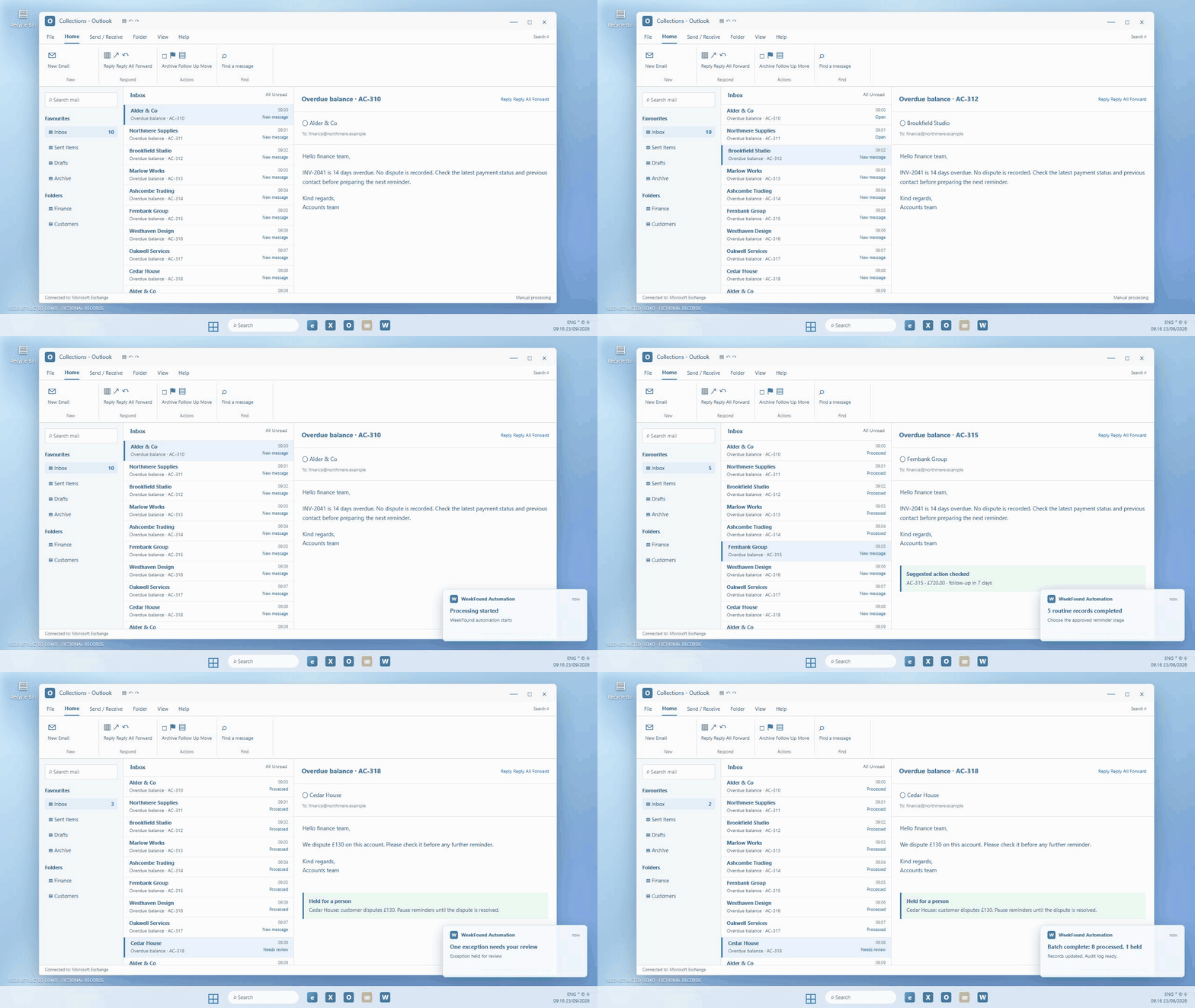
This short GIF reconstructs the manual task and the proposed automation using fictional records. It shows the ordinary items progressing and an exception held for a person. The time saving below is an illustrative target.

Credit control & debtor follow-up: a reconstructed Windows desktop showing routine work processed and an exception held for reviewDownload this GIF ↓

Less rework. More room to move the business forward.

The proposed design would handle repeatable steps, check work before it moves on and give people more capacity for decisions that matter. These benefits would need testing with a real team.

01 / CAPACITY

More time for the work that matters

Routine steps could move forward without repeated manual handling, while people stay involved when judgement is needed. Any time saved would be measured in a pilot.

02 / QUALITY

Fewer avoidable errors

A fresh payment check and dispute hold would prevent unnecessary reminders to customers who have paid or raised a valid query.

03 / OPPORTUNITY

Time to improve the business and its profitability

Collectors could devote more attention to conversations, payment plans and the accounts where judgement and relationships make the biggest difference.

BEFORE · MANUAL PROCESS

Every step waits for a person.

  1. Export and sort aged debt
  2. Check payments and previous contact
  3. Write reminders and attach statements
  4. Record promises and schedule another chase
PROPOSED WORKFLOW

Routine work progresses. Exceptions reach the team.

  1. A current collections queue
  2. A checked next action
  3. Follow-up that remembers
  4. Escalations with context

One connected process, from arrival to checked result.

  1. 01

    A current collections queue

    Refresh open invoices, cleared payments, disputes and contact history. Prioritise accounts by overdue age and agreed business rules rather than sending a blanket reminder.
  2. 02

    A checked next action

    Select the approved reminder stage and assemble the statement and invoice evidence. Recheck the balance immediately before sending and pause paid, disputed or already-contacted accounts.
  3. 03

    Follow-up that remembers

    Send permitted routine reminders, log contact and capture promised payment dates from replies. Schedule the next action and pause the sequence while a response or dispute needs attention.
  4. 04

    Escalations with context

    Give the collector a concise account history, missing evidence and suggested next step. Track delivery failures, broken promises and overdue exceptions in one queue.

Work inside the systems the team already uses.

Receivables ledger, payment status, shared mailbox and a collections queue with reminder rules and contact history.

The judgement stays with your people.

Collectors retain phone negotiations, payment plans, disputed balances, credit holds and legal escalation. The target covers routine account review and reminder administration, not all collections work or a promised increase in cash collected.

Prove the saving before calling it a result.

  1. 01

    Baseline the real work

    Observe at least two representative working weeks, including routine cases and exceptions. Agree the scope, volumes, quality checks and staff minutes before building.
  2. 02

    Connect, then run alongside the team

    Confirm system access, build the intake, rules, exception queue and audit history. Compare proposed actions with human decisions before enabling writes or sending messages.
  3. 03

    Pilot a controlled slice

    Enable only agreed actions, with duplicate protection, alerts and a pause control. Keep a manual fallback and expand only when the quality checks pass.
  4. 04

    Measure the complete cost in time

    Check handling time, reminders sent after payment, disputed accounts contacted in error and missed follow-ups. Track collections separately so time savings are not confused with cash recovery. Compare a representative post-pilot period with the same scope and workload; report the observed result, including review and correction time.

Could this help your business?

Get in touch and we’ll talk through what you’d like to improve, then explore whether a similar finance automation approach makes sense for you.

Get a free Time-Back Review →